
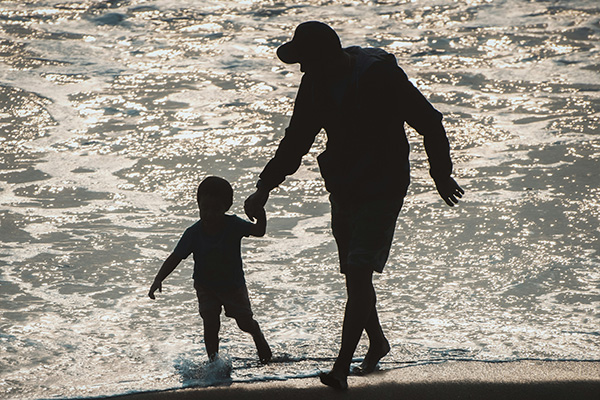
In Finding our Fathers, Sam Osherson cites a broad study indicating that only 17 percent of American men had a positive relationship with their fathers. In most cases the father was dead, divorced and missing, chemically impaired, or emotionally absent. If this amazing statistic is even close to the truth, something large and tragic has happened to one of the critical balances of nature. Indeed, Robert Bly asserts that the father-son relationship is the most damaged of all relationships since the Industrial Revolution.
—James Hollis*
Human civilization took tens of thousands of years to evolve from small groups of nomadic hunter-gatherers into communities of farmers, city dwellers, merchants, explorers, readers, and writers. Great shifts in lifestyle reshape how people relate to one another. Only about 250 years have passed since the last major change—the Industrial Revolution—and now we stand on the edge of another: the Virtual Revolution.
In this new era, our ways of connecting, communicating, and finding meaning are changing again. The traditional image of a family gathered around a fire or dinner table has been replaced by children and adults absorbed in digital worlds. Many people feel more comfortable online than in their real lives. We take for granted the marvels of modern life—artificial intelligence, instant communication, endless entertainment, advanced medicine, and longer lifespans. Yet, as our virtual connections grow stronger, some real-world bonds—especially between fathers and children—are fading or taking unfamiliar forms.
Fortunately, psychology has advanced enough to recognize and treat some of the emotional wounds caused by absent or distant father figures. Absence does not always mean physical disappearance. A father can live in the same home yet be emotionally, spiritually, or mentally unavailable. Such absence can leave deep and lasting effects on a child’s sense of worth, confidence, and identity.
Take Gary, for example. His father was a high-school coach who constantly pressured his son to excel in sports, though Gary had no interest or talent for athletics. When not demanding that Gary perform, his father spent his time at football games with his team, drinking with friends, or ignoring his family. Although he considered himself a responsible father, he never truly knew his son. Gary’s memories of him were filled with pain and rejection. It was only later, as an adult, that Gary realized he needed to become the father he never had—someone capable of offering himself guidance, kindness, and support.
In my work as a therapist, I use an approach called reparenting—replacing the old, unhelpful messages learned from one’s original parental figures with new, healing and empowering messages. The essence of this practice is that no one else can heal the wounds left by an absent father so long ago. We must learn to do it ourselves. That means finding an internal voice to affirm our own worth, give ourselves approval, feel that we belong, and cultivate inner strength and safety.
For men especially, this process involves recognizing what lessons or qualities were missing from their relationship with their fathers—such as protection, encouragement, wisdom, or conditional love—and consciously developing those qualities within themselves. By doing so, they create an inner father figure, an idealized source of guidance who can mentor and support them throughout life.
Ultimately, refathering ourselves is not about replacing our biological fathers but about reclaiming the father energy we lack. It is an act of self-discovery and growth—learning to become our own source of wisdom, confidence, and compassion for the rest of our lives.
by David Bowman, LMFT
This article was first published on davidbowmanlmft.com. David is a licensed California Marriage and Family Counselor and the creator of Father Figures: Reparenting for Gay Men and Father Figures: Reparenting for Straight Men
*James Hollis: Under Saturn’s Shadow: The Wounding and Healing of Men. Inner City Books, 1994, pp. 84-85.
Photo by Tim Mossholder on Unsplash